

Mini Split Service in Emerald Isle, NC
Struggling with uneven temperature at home? Book a diagnostic visit to restore your mini split's efficiency in Emerald Isle. Expert repairs and installations await!
Uneven Cooling and Heating Requires Immediate Mini Split Attention
Is your mini-split AC unit failing to sustain the ideal indoor temperature at your home, leaving you uncomfortable despite the thermostat setting? You likely require a timely and efficient service solution to restore balance to your indoor climate; contact us today to schedule a diagnostic visit.
Homeowners in Emerald Isle rely heavily on ductless systems to manage the swing between humid, 90-degree summers and damp, chilly winters. When these systems falter, the impact on your daily life is immediate. We provide decisive action to identify the root cause of the failure, whether it is a refrigerant leak, an electrical fault, or a sensor error and implement a lasting fix.
- Same-Day Service Available: Do not wait in discomfort; we offer quick responses to get your system running again.
- Expert Installation and Repair: Rely on certified technicians who understand the complexities of inverter technology for top-quality work.
- Energy-Efficient Systems: Reduce your utility bills by optimizing your existing unit or upgrading to the latest HVAC technology.
Enjoy peace of mind with our extended warranties and straightforward financing options designed to keep your home comfortable without breaking your budget. Airtech Mechanical Service Inc. brings professional-grade technical expertise directly to your doorstep to handle everything from routine maintenance to complex board replacements.
Comprehensive Diagnostics and Service Scope
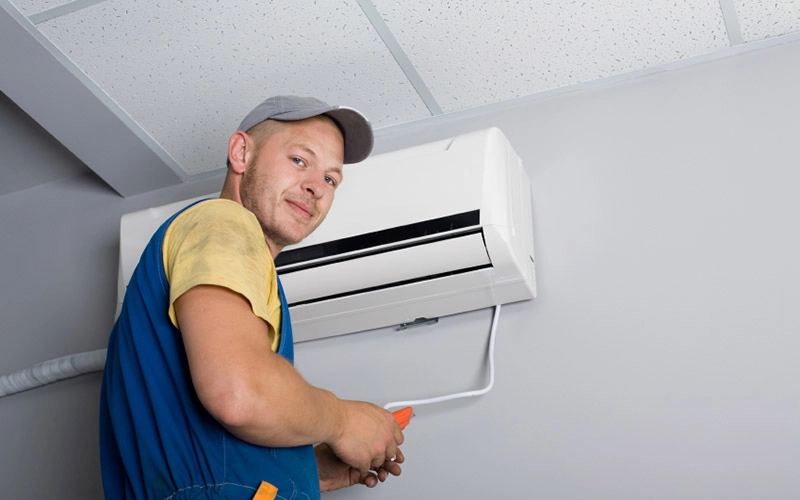
When a technician arrives at your property, the objective is to move beyond surface-level symptoms and address the mechanical or electrical reality of your mini-split system. Modern ductless units utilize sophisticated inverter technology, which modulates compressor speed to match demand. Servicing these units requires specialized tools and diagnostic protocols different from traditional central air systems.
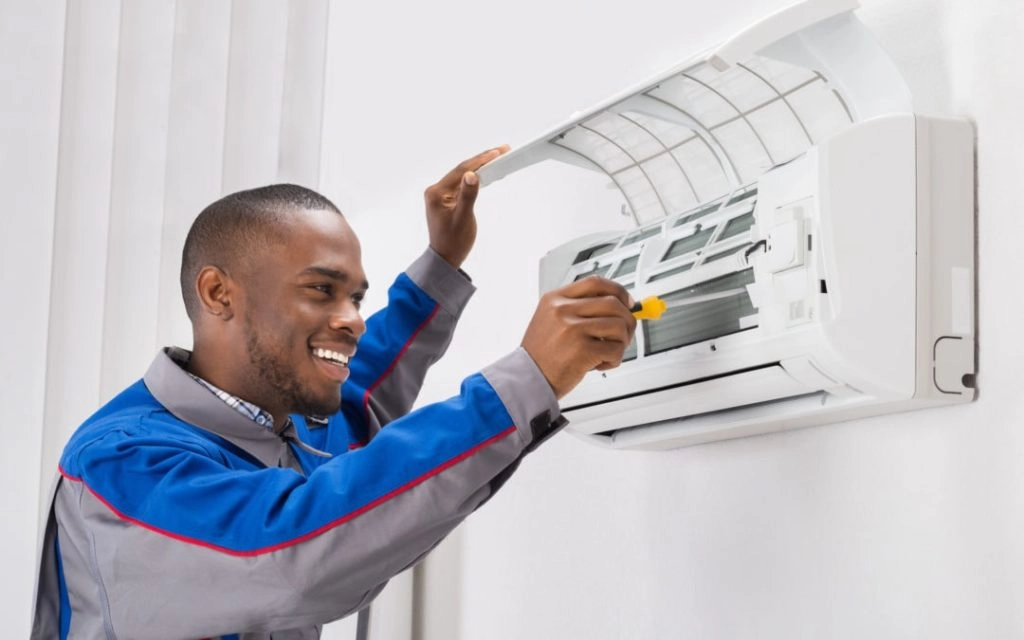
Your service visit focuses on restoring the unit to manufacturer specifications. This involves a rigorous inspection of both the indoor air handler and the outdoor condenser unit. The goal is to ensure that the system is not merely blowing air, but actively conditioning the space, controlling humidity, and operating at peak efficiency.
The scope of a standard professional service visit includes:
Electrical System Verification
- Technicians inspect the communication wire that connects the indoor and outdoor units. This wire is critical for transmitting data regarding temperature adjustments and fan speeds.
- Capacitors, relays, and circuit boards are tested for proper voltage and amperage.
- All electrical connections are tightened to prevent arcing or overheating, which can lead to system failure or fire hazards.
Refrigerant Charge Analysis
- Gauges are attached to measure superheat and subcooling levels. This data tells the technician exactly how much refrigerant is in the system and if it is changing states (liquid to gas) efficiently.
- Leak detection methods, such as electronic sniffers or UV dye, are used if pressure levels are low.
- Refrigerant is added only if a leak has been identified and repaired; overcharging a mini-split can damage the compressor.
Airflow and Filtration Maintenance
- The reusable mesh filters are removed, cleaned, and sanitized to ensure unimpeded airflow.
- The blower wheel inside the air handler is inspected for mold, dust buildup, or debris, which can cause the wheel to become unbalanced and noisy.
- Vanes and louvers are checked to ensure they oscillate correctly and direct air where it is needed.
Condensate Management
- The condensate drain line is flushed to prevent water backups, which are a common cause of wall damage in ductless installations.
- If a condensate pump is installed, it is tested to ensure it is effectively pumping water away from the unit.
Coil Cleaning and Inspection
- Evaporator and condenser coils are treated with specialized cleaners to remove salt spray, dirt, and pollen. In Emerald Isle, salt accumulation is a primary concern that degrades heat transfer efficiency.
- Fins are combed if bent to allow maximum air intake.
The Mini Split Installation and Replacement Process
Installing a mini-split system is less invasive than installing central air, but it requires precision to ensure the unit operates quietly and efficiently. Proper sizing and placement are the foundations of a successful installation. A unit that is too large will short-cycle, leading to humidity issues, while a unit that is too small will run constantly without reaching the desired temperature.
The process begins with a load calculation to determine the BTU requirements for the specific zone. Once the equipment is selected, the physical installation follows a strict procedural workflow to protect the integrity of your home and the new equipment.
The installation workflow proceeds as follows:
Site Assessment and Mounting
- The technician identifies the optimal wall location for the indoor unit, ensuring it is high enough for proper air distribution but accessible for maintenance.
- A mounting plate is secured to the wall studs to support the weight of the air handler.
- The outdoor location is selected to ensure adequate clearance for airflow and distance from lot lines or obstructions.
Wall Penetration and Conduit Routing
- A three-inch hole is drilled through the exterior wall at a slight downward angle. This angle is crucial for gravity-fed drainage.
- A sleeve is inserted into the hole to protect the refrigerant lines and electrical cables from rough edges and pests.
- Line sets, drain tubing, and communication wires are bundled and passed through the conduit.
Outdoor Unit Setup
- The condenser is placed on a composite pad or mounted to the exterior wall using brackets. In coastal areas, wall brackets are often preferred to keep the unit above flood levels and away from ground debris.
- The unit is leveled perfectly to ensure the compressor oil remains balanced.
Line Set Connection and Flaring
- Technicians use a flaring tool to create a precise cone shape on the copper tubing ends. This connects the lines to the unit ports.
- A torque wrench is used to tighten the flare nuts to the exact manufacturer specifications (usually measured in foot-pounds) to prevent refrigerant leaks.
Vacuum and Pressure Testing
- Before releasing refrigerant, the lines are pressurized with nitrogen to check for leaks.
- A vacuum pump is attached to the system to remove all moisture and air from the lines. The system must hold a deep vacuum (measured in microns) to confirm the circuit is dry and tight.
System Commissioning
- The service valves are opened to release the refrigerant into the lines.
- The system is powered on, and the technician cycles through heating and cooling modes to verify performance.
Determining Repair vs. System Replacement
Deciding whether to repair an aging mini-split or invest in a new system is a financial and practical calculation. While ductless systems are durable, they do not last forever. Making the right choice depends on the age of the unit, the cost of the repair, and the efficiency of current models compared to your existing hardware.
If your system uses R-22 refrigerant, replacement is almost always the correct path, as this refrigerant is phased out and incredibly expensive to source. For newer systems using R-410A, the decision requires a closer look at component failure.
Consider replacement under the following conditions:
The Compressor Has Failed
- The compressor is the heart of the system. If it fails outside of the warranty period, the cost of the part and labor often approaches the cost of a brand-new outdoor unit.
The Unit is Over 12-15 Years Old
- Most mini-splits have a lifespan of 15 to 20 years. If your unit is approaching this age and requires a major repair (like a circuit board or motor), the money is better spent on a new system with a fresh warranty.
The 50% Rule
- If the cost of the repair exceeds 50% of the value of a new system, replacement is the financially sound choice.
Efficiency Drop-off
- Older units may have SEER ratings around 13-15. Modern systems can exceed 25 SEER. Replacing an inefficient unit can lower your monthly energy costs significantly, offsetting the installation price over time.
Airtech Mechanical Service Inc. provides transparent quotes so you can compare the cost of a band-aid fix against the long-term value of a new installation.
Local Operational Factors in Emerald Isle
Operating HVAC equipment in Emerald Isle presents unique challenges due to the coastal environment. The salt air is aggressive and accelerates corrosion on aluminum fins and copper tubing. Standard equipment that works inland may rot out quickly on the coast without proper protection.
Furthermore, the region experiences intense summer humidity and a hurricane season that demands secure equipment mounting. Residents must ensure their systems are resilient enough to handle these environmental stressors.
Key local considerations include:
Corrosion Protection
- We recommend systems with factory-applied anti-corrosive coatings on the condenser coils.
- Regular freshwater rinsing of the outdoor unit is essential maintenance for homeowners in this area to extend the life of the fins.
Humidity Control
- Mini-splits are excellent at dehumidification (Dry Mode). However, in extremely humid environments, the condensate drain can grow algae quickly. Regular treatment of the drain line is necessary to prevent clogs.
Wind and Storm Security
- Outdoor units must be anchored securely. If mounted on a stand, it should be bolted down. If wall-mounted, stainless steel hardware is required to prevent rust failures during high winds.
Permitting and Codes
- Electrical connections for mini-splits often require a disconnect box located within sight of the outdoor unit.
- Local codes dictate where units can be placed relative to property lines and opening windows. Professional installers navigate these regulations to avoid fines or forced relocation of equipment.
Why Professional Service Ensures Longevity
Modern mini-split systems are complex pieces of technology involving printed circuit boards, electronic expansion valves, and variable-speed motors. Attempting DIY repairs or hiring general handymen often leads to misdiagnosis and further damage. A "low refrigerant" diagnosis, for example, is frequently incorrect; the issue is often a dirty sensor or restricted airflow.
Certified professionals utilize specific tools that are not standard in a general toolkit. This includes micron gauges for vacuuming lines, digital manifolds for pressure testing, and torque wrenches for flare nut connections. Without these tools, a system cannot be installed or serviced to factory standards.
Furthermore, manufacturer warranties are often contingent on proof of professional installation and maintenance. Neglecting professional service can void the warranty, leaving you responsible for the full cost of parts if a defect arises. Investing in professional care ensures that your system operates safely, efficiently, and reliably for its entire intended lifespan.
Call Us Now!
Secure your home comfort and protect your investment by scheduling your service appointment today.
Other Services