

Mini Split Installation in Havelock, NC
Experience focused comfort with our Mini Split Installation in Havelock. Learn more about our customized climate control solutions, ensuring lower energy costs and efficient space management.
Inconsistent Temperatures and Humidity Levels Demand a Better Solution
Battling with inconsistent room temperatures or high energy bills in Havelock makes it impossible to relax in your own home, especially when traditional HVAC systems fail to address specific hot spots. A mini split system provides an efficient climate control solution that targets specific zones rather than wasting energy cooling empty spaces. Contact Airtech Mechanical Service Inc. today to schedule a site assessment or discuss available financing options.
A ductless system offers a streamlined path to comfort without the invasive construction associated with standard ductwork. By isolating climate control to the rooms that need it most, homeowners can bypass the inefficiencies of central air conditioning.
- Achieve individual room temperature control with multi-zone capabilities.
- Reduce energy costs with an efficient system tailored to your specific usage needs.
- Enjoy the quiet operation and minimal maintenance of a modern mini split system.
All installations are compliant with local codes, backed by comprehensive warranties and flexible financing options to ensure your investment is protected.

What You Get With a Professional Mini Split Installation
Choosing to install a ductless system is an investment in long-term efficiency and immediate comfort. When you move forward with a professional installation, you are purchasing a comprehensive service that transforms how air is distributed throughout your property. The scope of work goes far beyond simply hanging a unit on the wall; it involves a calculated approach to thermodynamics and electrical safety.
Scope of Installation
The process begins with a load calculation. This is not a guess; it is a mathematical assessment of the space required to be cooled or heated. Installers verify the square footage, insulation quality, window direction, and local climate factors to determine the exact British Thermal Unit (BTU) capacity needed. An undersized unit will run constantly and fail to dehumidify, while an oversized unit will "short cycle," leading to wear and tear without removing moisture.
Timeline and Efficiency
For most residential applications, a single-zone mini split installation is a same-day service. Technicians arrive with the unit, line sets, mounting hardware, and electrical components. Multi-zone systems, which connect one outdoor condenser to multiple indoor air handlers, may require additional time depending on the complexity of running line sets through crawl spaces or attics. The goal is always to have the system up and running with minimal disruption to your daily routine.
Hardware and Components
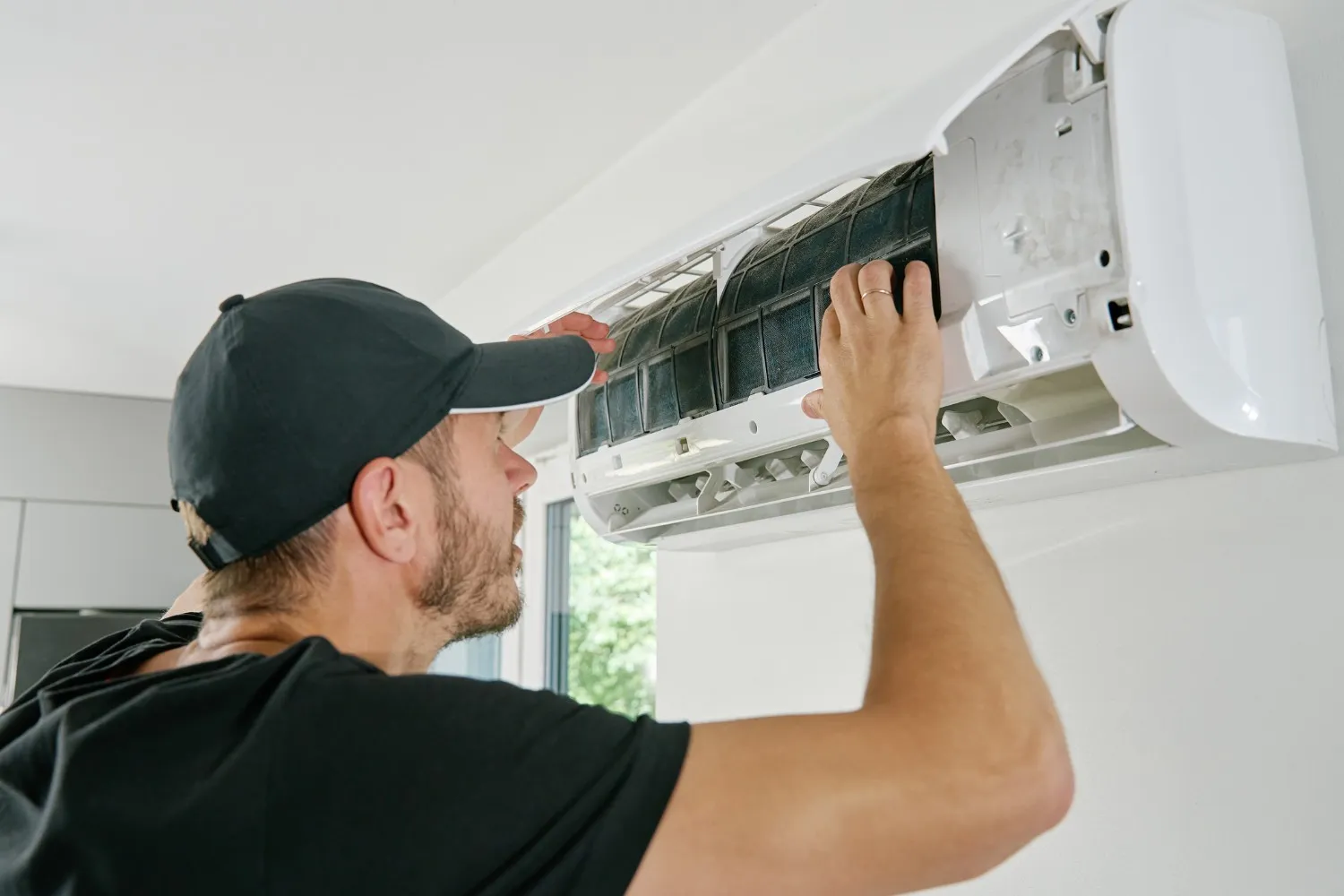
A standard installation package includes the indoor evaporator unit (the air handler) and the outdoor condenser unit. However, the critical components that ensure longevity are often unseen. This includes high-quality, insulated copper refrigerant lines, a dedicated electrical disconnect box for safety, condensate drain lines to prevent water damage, and a pad or bracket to secure the outdoor unit. You receive a fully sealed, charged, and tested system ready to handle the regional heat.
The Installation Process: From Assessment to Airflow
Understanding the mechanics of the installation helps homeowners appreciate the precision required for a ductless system to function correctly. This is a technical process where millimeters matter, particularly when drilling through exterior walls and leveling condensate lines.
Site Selection and Mounting
- The technician identifies the optimal wall placement for the indoor unit. This must be an exterior wall or a location where a line set can easily reach the outside.
- The indoor unit must be mounted high on the wall for optimal air distribution but accessible for filter cleaning.
- A mounting plate is secured to the studs to ensure the unit does not vibrate or shift during operation.
- A specific three-inch hole is drilled through the wall at a slight downward angle. This angle is crucial as it relies on gravity to help the condensate drain line remove moisture from the home.
Outdoor Unit Setup
- The outdoor condenser is positioned away from direct sunlight when possible and kept clear of vegetation to ensure proper airflow.
- For ground-level installations, a composite or concrete pad is used to elevate the unit off the dirt, preventing corrosion and debris buildup.
- If wall mounting is required due to space constraints or flood risks, heavy-duty brackets are anchored into the foundation.
- Mid-page, Airtech Mechanical Service Inc. technicians ensure that the outdoor unit is leveled perfectly to protect the compressor’s internal mechanisms.
Connecting the System
- Refrigerant lines, control wiring, and the drain hose are bundled and passed through the wall sleeve.
- Connections are made using flared fittings. This is the most critical step; a poor flare results in refrigerant leaks that can ruin the system within months.
- A torque wrench is used to tighten these connections to manufacturer specifications, never hand-tightened or over-tightened.
Vacuuming and Testing
- Before refrigerant is released, the lines must be vacuumed. A vacuum pump removes all air and moisture from the copper lines.
- Moisture left in the lines can mix with refrigerant to create acid, which eats away at the compressor windings.
- Technicians perform a micron gauge test to confirm the lines are completely sealed and devoid of contaminants.
- Once the vacuum holds, the refrigerant valves are opened, and the system is powered on for a test run.
Deciding When to Retrofit or Replace Your Current System
Homeowners often debate between repairing an aging central HVAC system, extending ductwork to a new addition, or switching to ductless. Making the right decision depends on the current state of the home’s infrastructure and the specific cooling goals.
When to Choose Ductless Over Central Air Repair
If the existing ductwork is compromised, leaky, or uninsulated, replacing the central air unit will not solve the efficiency problem. You will continue to lose conditioned air into the attic or crawl space. In this scenario, bypassing the ducts entirely with a mini split is often more cost-effective than resealing and insulating the entire duct system. If a central unit is over 15 years old and facing a major compressor failure, the cost of replacement often rivals the cost of installing a high-efficiency multi-zone mini split system, which offers better zoning control.
Solutions for Additions and Renovations
Converting a garage, finishing a sunroom, or building a home office usually leaves homeowners with a cooling deficit. Extending existing ductwork to these areas is invasive and often overworks the main HVAC system, leading to reduced performance in the rest of the house. A mini split is the definitive solution for these "bonus rooms." It operates independently, meaning you do not have to cool the entire house just to be comfortable in the home office.
Efficiency Considerations (SEER2 Ratings)
Modern mini splits boast some of the highest SEER2 (Seasonal Energy Efficiency Ratio) ratings in the industry. While a standard central AC might rate between 14 and 16 SEER, mini splits frequently achieve ratings of 20 to 25 SEER or higher. This is due to inverter technology. Unlike traditional compressors that simply turn on and off, an inverter compressor ramps up or down to maintain the temperature. If your current system causes lights to flicker when it kicks on or results in massive temperature swings, switching to an inverter-driven mini split will stabilize both comfort and energy consumption.
Local Installation Factors for Havelock Residents
Operating an HVAC system in North Carolina requires specific attention to environmental factors. The equipment must be rugged enough to handle high humidity, salt air, and storm seasons.
Humidity Control and Drainage
The humid subtropical climate means that air conditioners must work double duty: cooling the air and removing moisture. If a mini split is not drained correctly, the high volume of condensate can back up, causing water damage to interior walls. Installers must ensure that drain lines are routed clear of the foundation and, in some cases, equipped with condensate pumps if gravity drainage isn't possible.
Protection Against Elements
Coastal and near-coastal environments introduce salt and moisture that accelerate corrosion on outdoor coils. High-quality installations often utilize condensers with anti-corrosive coatings on the fins to extend the lifespan of the unit. Furthermore, given the potential for tropical storms and hurricanes from June to November, the physical security of the outdoor unit is non-negotiable. It must be bolted down to the pad or bracket to withstand high wind loads.
Permitting and Electrical Requirements
Local building codes in Havelock and the surrounding county dictate specific electrical requirements for HVAC installations. A dedicated circuit is almost always required to prevent overloading your home’s electrical panel. Professional installers handle the coordination of necessary mechanical and electrical permits, ensuring that the work passes inspection and that your homeowner’s insurance remains valid. Unpermitted work can lead to complications during a future home sale or insurance claim.
Why Precision Matters in Ductless Systems
The difference between a mini split that lasts five years and one that lasts fifteen usually comes down to installation quality rather than the brand of the equipment. Ductless systems are intolerant of shortcuts.
- Flare Connections: The number one cause of mini split failure is a leaking flare connection. Precision tools and proper deburring of copper pipes are required to create a perfect seal that holds high-pressure refrigerant.
- Wire Management: Communication wires between the indoor and outdoor units carry data, not just power. Poor splicing or using the wrong gauge of wire can cause communication errors, causing the system to shut down randomly.
- Proper clearances: The indoor unit needs specific clearance from the ceiling to sense the return air temperature accurately. If mounted too close to the ceiling, the thermostat will read the temperature incorrectly, leading to short cycling and poor comfort.
A correctly installed system provides "set it and forget it" comfort. It eliminates the noise of window units and the energy loss of ductwork. By focusing on the technical details of the installation, from load calculations to micron-level vacuum testing, you ensure that the system performs at its rated efficiency for years to come.
Airtech Mechanical Service Inc. focuses on these precise standards to deliver reliable climate control solutions. Whether you are looking to cool a single hot room or retrofitting an entire home, professional installation ensures your comfort is guaranteed.
Secure your home comfort and lower your energy bills by scheduling your mini split installation today.
Zoned Cooling Installed With Placement Precision
Professional mini split installation in Havelock, NC requires accurate placement, capacity matching, and system configuration to maintain balanced zone performance. Airtech Mechanical Service Inc. installs mini split systems engineered to operate effectively within designated spaces. Improper setup often results in uneven output. Our installations focus on precision and long-term reliability.
Introduce zoned cooling solutions configured for accuracy and consistent performance.
Proceed With Professional Mini Split Installation
Other Services