

Mini Split Installation in Craven, NC
Explore tailored mini split installations in Craven for efficient cooling and heating. Discover our swift, professional service and flexible financing options today!
Eliminate Hot Spots and High Energy Bills with Precision Cooling
Older HVAC systems or window units often fail to combat the humid subtropical heat typical of Craven, leaving you with uneven temperatures and soaring utility costs. Secure a tailored mini split installation today to achieve consistent, efficient cooling and heating exactly where you need it, contact Airtech Mechanical Service Inc. now to discuss system options and available financing.
Inconsistent airflow and the relentless humidity of North Carolina summers can make maintaining a comfortable home environment a constant battle. A ductless mini split system solves these issues by delivering direct temperature control to individual rooms, bypassing the energy loss associated with leaky ductwork.
- Targeted Zoning: Customize the temperature in specific rooms without wasting energy on the entire house.
- Humidity Control: Advanced inverter technology actively removes excess moisture, critical for local summers.
- Rapid Deployment: Professional installation is often completed in a single day with minimal structural disruption.
All installations are performed in full compliance with North Carolina building codes, backed by comprehensive manufacturer warranties and flexible financing plans.
The Solution for Homes Without Ductwork or uneven Temperatures
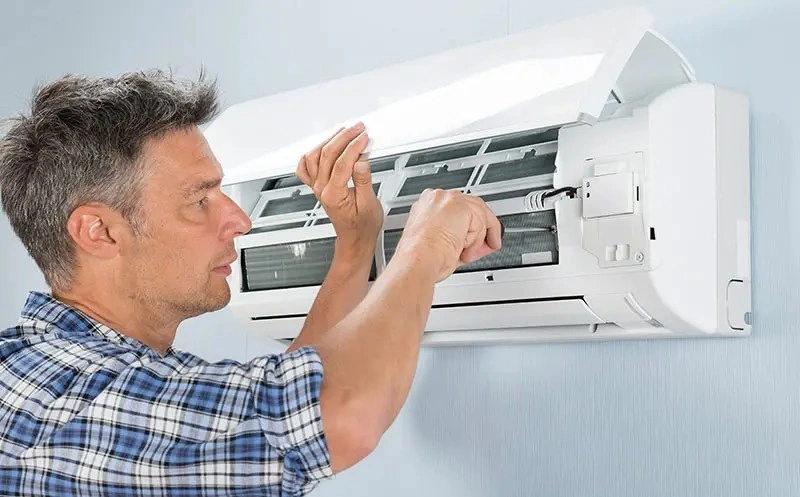
Many homes in Craven rely on aging central systems that struggle to push air to the second floor, or they utilize baseboard heating with no cooling option. Airtech Mechanical Service Inc. provides ductless solutions that bridge this gap. A mini split system consists of an outdoor compressor/condenser and one or more indoor air-handling units, connected by a small conduit. This design eliminates the need for bulky ductwork, making it the ideal solution for historic homes, sunrooms, garage conversions, or additions where extending existing ducts is cost-prohibitive or physically impossible.
By moving away from "all-or-nothing" central air conditioning, homeowners gain granular control over their environment. If the living room needs to be cool during the day but the bedrooms are unoccupied, the system adjusts accordingly. This level of precision translates directly to lower monthly energy expenditures.

What Included in a Professional Mini Split Installation
When investing in a ductless system, the hardware is only part of the equation. A complete installation package covers the assessment, the equipment, and the labor required to ensure the system operates at peak efficiency for years to come.
- Load Calculation: A specific manual J calculation determines the exact BTU requirement for the space. Undersized units run constantly without cooling; oversized units short-cycle and fail to dehumidify.
- System Selection: Options include single-zone units for one room or multi-zone condensers that support up to eight indoor heads.
- Inverter Technology: Modern systems use variable-speed compressors that ramp up or down based on demand, rather than hard starting and stopping. This maintains steady temperatures and reduces electrical spikes.
- Filtration Systems: Multi-stage filtration is standard, trapping dust, pollen, and allergens, which improves indoor air quality significantly.
- Smart Controls: Most units come with remote controls or Wi-Fi integration, allowing users to adjust settings from a smartphone app.
The Installation Workflow: Step-by-Step
Understanding the installation process helps homeowners prepare for the work day. Unlike central HVAC replacements which can take days of metalwork, ductless systems are less invasive.
- Site Assessment: Technicians verify the structural integrity of the wall where the indoor unit will be mounted and ensure the outdoor unit has proper clearance for airflow.
- Mounting the Indoor Unit: A metal bracket is secured to the interior wall studs. The unit must be perfectly level to ensure proper drainage of condensate water.
- Drilling the Conduit Pathway: A small hole, typically three inches in diameter, is drilled through the exterior wall. This houses the refrigerant lines, drainage tubing, and electrical wiring.
- Placing the Outdoor Condenser: The outdoor unit is placed on a composite pad or mounted to the exterior wall using brackets. In areas prone to heavy rain or standing water, wall mounting is often preferred to keep the unit elevated.
- Connecting the Lines: Refrigerant lines are run from the outdoor unit to the indoor head. These lines are insulated and often covered with a decorative line set cover to protect them from UV rays and improve aesthetics.
- Pressure Testing and Evacuation: Before releasing refrigerant, the lines are pressure-tested with nitrogen to check for leaks. A vacuum pump then removes all moisture and air from the lines.
- Electrical Connection: A dedicated circuit is usually required for the outdoor unit, which then powers the indoor unit. Licensed electricians handle the connection to the main breaker panel.
- Final Commissioning: The system is powered on, and technicians measure output temperatures, airflow, and drainage to verify perfect operation.
When to Replace vs. Repair Your Current Cooling Setup
Deciding whether to repair an existing window unit, older central system, or aging mini split versus installing a new system involves evaluating long-term costs and comfort.
- Age of Equipment: Heat pumps and air conditioners typically last 10 to 15 years. If your current equipment is approaching this age, efficiency degradation means you are paying more for less cooling.
- Refrigerant Type: Older systems utilizing R-22 refrigerant are obsolete. If these units develop a leak, the cost of refrigerant is exorbitant, and replacement is almost always the financially sound choice.
- Frequency of Repairs: If you have required repairs more than once in the last two years, or if a single repair estimate approaches 50% of the cost of a new system, replacement is recommended.
- Efficiency Ratings (SEER): older units may operate at 10 or 12 SEER. Modern mini splits often exceed 20 or even 25 SEER. The difference in electrical consumption can offset the cost of installation over just a few years.
- Noise Levels: As compressors age, they become louder. If your current cooling method disrupts sleep or conversation, deciding whether to repair an existing window unit or upgrade to a new ductless system is critical for comfort.
Critical Considerations for the Local Climate
Installing HVAC equipment in Craven requires specific attention to environmental factors. The humid subtropical climate presents challenges that generic installation guidelines might overlook.
- Humidity Management: High humidity loads mean the system must run long enough to pull moisture from the air. If a unit is oversized, it cools the room too quickly and shuts off before dehumidification occurs, leading to a cold, clammy feeling. Correct sizing is paramount here.
- Corrosion Resistance: Coastal and near-coastal environments contain salt in the air which accelerates corrosion on outdoor coils. Units with Gold Fin or Blue Fin anti-corrosion coatings are strongly recommended to extend the lifespan of the condenser.
- Drainage Planning: With high humidity comes high condensate production. The gravity drain line must have a consistent slope. If gravity drainage isn't possible due to the unit's location, a condensate pump must be installed to mechanically remove the water and prevent leaks inside the home.
- Hurricane Season Prep: Outdoor units must be securely anchored to their pads or wall brackets to withstand high wind loads during tropical storms or hurricanes common to the region in late summer and fall.
Comparing Configurations: Wall, Floor, and Ceiling
Ductless systems offer versatility in design to match the interior aesthetics and functional needs of different rooms.
- High-Wall Mounts: These are the most common and cost-effective. They are installed high on a wall, out of the way, and are excellent for throwing air across a large room.
- Floor-Mounted Consoles: These units sit low on the wall, similar to a radiator. They are ideal for rooms with slanted ceilings (like finished attics) or where wall space is limited by windows. They are also highly effective for heating, as they deliver warm air at the floor level.
- Ceiling Cassettes: These recessed units fit between ceiling joists and sit flush with the ceiling. They distribute air in four directions and are aesthetically discreet, making them popular for larger living areas or offices.
- Ducted Mini Splits: For homeowners who want the efficiency of a mini split but the look of central air, a concealed duct unit can be installed in a crawlspace or attic, using short duct runs to feed vents in nearby rooms.
The Role of Electrical Upgrades
Mini split systems require a dedicated electrical circuit to operate safely. They cannot simply be plugged into a standard wall outlet like a window unit.
- Panel Capacity: The main service panel must have enough amperage capacity to support the new equipment. In older homes, this might require a panel upgrade or the addition of a sub-panel.
- Disconnect Boxes: Code requires a disconnect box located within sight of the outdoor unit. This allows technicians to safely cut power to the unit during maintenance.
- Whip Connections: A flexible weather-tight conduit, known as a whip, connects the disconnect box to the condenser, protecting the wires from the elements.
Investment Value and Energy Savings
Switching to a ductless mini split system is an investment in both property value and monthly savings. Because these systems use variable-speed compressors, they do not consume maximum energy continuously. They ramp up to reach the set temperature and then throttle down to maintain it, using a fraction of the electricity.
For homes in Craven utilizing baseboard electric heat or space heaters in the winter, the savings are even more dramatic. Mini splits are heat pumps, meaning they can reverse their operation to provide heating. Modern hyper-heating models remain efficient even when outdoor temperatures drop significantly, offering a year-round comfort solution that costs far less to operate than resistance heating. Explore financing options.
Furthermore, Airtech Mechanical Service Inc. notes that installing permanent, energy-efficient cooling solutions can increase the resale appeal of a home. Buyers are increasingly looking for homes with modern, efficient HVAC systems rather than window units or aging central air.
Maintenance for Longevity
To ensure the system operates at peak efficiency, regular maintenance is required. While mini splits are durable, they are not maintenance-free.
- Filter Cleaning: The mesh filters on indoor units trap dust and particulates. These should be removed and washed every two to four weeks, depending on usage and air quality. Clogged filters reduce airflow and force the system to work harder.
- Coil Cleaning: Over time, the indoor blower wheel and coil can accumulate mold or dust, especially in humid environments. Professional deep cleaning prevents odors and maintains efficiency.
- Condenser Care: The outdoor unit must be kept clear of debris, leaves, and overgrown vegetation. Airflow restrictions at the condenser can cause the system to overheat and shut down.
- Drain Line Flushing: Algae can grow in the condensate drain line, leading to clogs and water backups. Regular flushing ensures water flows freely away from the home.
Take Control of Your Home Comfort Today
Don't let the heat and humidity dictate your comfort level. A professionally installed mini split system offers precise temperature control, superior energy efficiency, and quiet operation that transforms how you experience your home. Whether you need to cool a single bonus room or are looking for a whole-home zoning solution, the right technology is available to meet your needs.
Ensure your home remains a sanctuary against the weather. Contact us today to schedule a consultation and take the first step toward a cooler, more comfortable living space.
Other Services