

Geothermal Repair in Jacksonville, NC
Need geothermal system repairs in Jacksonville, NC? Contact us for expert diagnostics and repairs to optimize system efficiency. Quick, reliable service assured.
Geothermal System Failure Requires Immediate Expert Repair
Struggling with unexpected breakdowns or inefficiency in your geothermal system can be stressful, especially given the distinct seasonal shifts in Jacksonville, NC. Our expert technicians are ready to deliver prompt and reliable repair services to restore your system's performance. Call us immediately or apply for financing to expedite your repair:
- Rapid response and on-site problem diagnosis within 24 hours.
- Detailed, transparent quotes ensuring you understand service costs and options.
- Long-lasting repairs with warranty-backed service for peace of mind.
All services are executed by seasoned professionals, ensuring compliance with local codes and providing industry-leading warranties. At Airtech Mechanical Service Inc., we understand that a malfunctioning geothermal heat pump compromises both your comfort and your utility bills, and we move quickly to rectify the issue.
Comprehensive Geothermal Diagnostic and Repair Scope
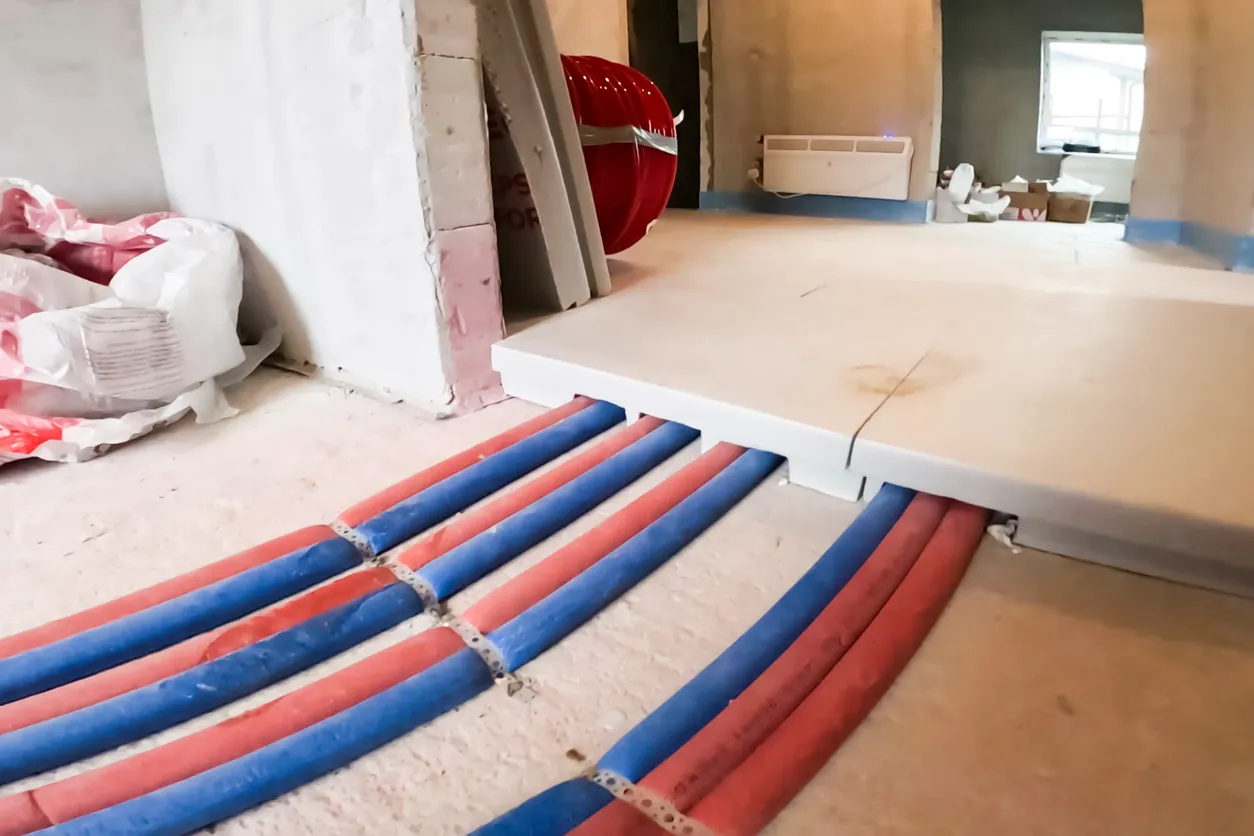
When a geothermal system fails, the issue typically lies within one of three areas: the ground loop, the heat pump unit, or the distribution system (ductwork). Unlike standard HVAC troubleshooting, geothermal repair requires specialized knowledge of thermodynamics and fluid dynamics. A standard technician may overlook flow rate discrepancies or loop pressure drops that are critical to system health.
Upon arrival, the focus shifts immediately to accurate fault isolation. This involves measuring the heat of extraction (in winter) or heat of rejection (in summer) to determine if the unit is transferring energy efficiently. Technicians verify water flow rates through the coaxial heat exchanger and check the antifreeze concentration in the loop field. This rigorous diagnostic process ensures that the repair addresses the root cause, not just the symptom.
Homeowners can expect a clear explanation of the failure point. Whether it is a seized compressor, a leaking flow center, or a fouled heat exchanger, the scope of work is defined before any tools are applied. The goal is to return the system to its factory-specified coefficient of performance (COP) and energy efficiency ratio (EER).
Understanding the Repair Process for Loop and Pump Issues
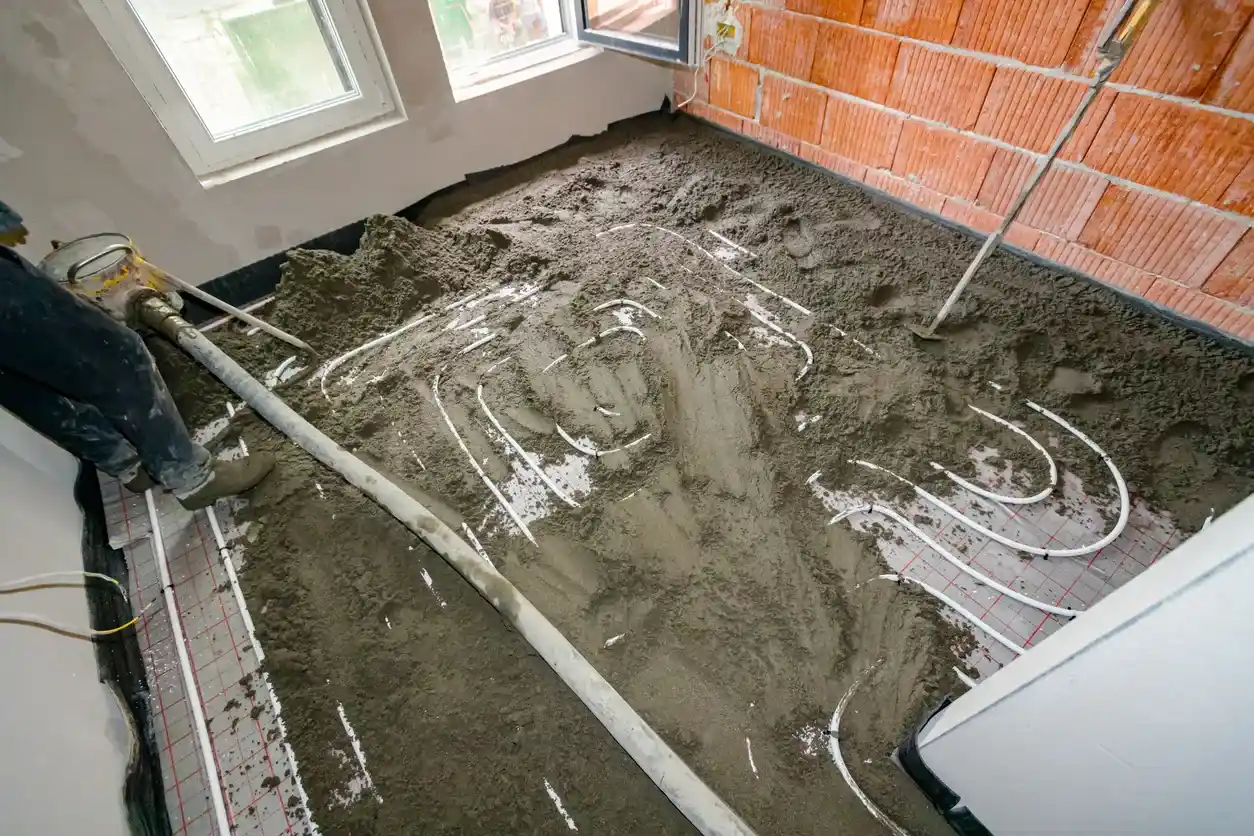
Restoring a geothermal system involves a systematic approach to mechanical and hydraulic components. The process changes depending on whether the system utilizes a closed-loop or open-loop configuration, but the fundamental steps regarding the heat pump remaining consistent:
- Loop Pressure Verification: For closed-loop systems, the technician first checks the static pressure. A drop in pressure often indicates a leak in the underground piping or the flow center. If a leak is suspected, the loop is isolated, and pressure testing is conducted to locate the breach.
- Flow Center Maintenance: The pumps that circulate water through the ground loop are the heart of the system. Technicians inspect these pumps for air locks, cavitation, or electrical failure. Repressurizing the loop and purging air pockets is a common repair step to restore proper circulation.
- Heat Exchanger Cleaning: In open-loop systems, mineral deposits and scaling can coat the inside of the heat exchanger, insulating the refrigerant from the water. Acid flushing is performed to dissolve these deposits and restore thermal conductivity.
- Refrigerant Circuit Repair: Just like a standard air conditioner, a geothermal heat pump relies on a refrigeration cycle. Technicians check for refrigerant leaks, test the reversing valve operation, and verify that the compressor is operating within safe amperage limits.
- Control Board and Sensor Calibration: Geothermal systems rely on complex logic boards to manage water flow and compressor staging. Faulty sensors are replaced, and control algorithms are tested to ensure the system responds correctly to thermostat demands.
Common Geothermal Failures and Solutions
Geothermal systems are renowned for their longevity, but specific components are prone to wear over time. Identifying these issues early can prevent catastrophic failure and expensive component replacement:
- Scale Buildup (Fouling): This is prevalent in areas with hard water or in open-loop systems. Scale acts as an insulator, preventing the heat pump from absorbing or rejecting heat into the water. The solution involves chemical flushing of the heat exchanger.
- Loop Leaks: Although rare, ground loops can develop leaks due to shifting soil or accidental excavation. Repair involves locating the wet spot, excavating the specific section, and using heat fusion to weld new polyethylene piping.
- Compressor Failure: If the system is forced to run with low water flow or improper refrigerant charges, the compressor can overheat and fail. Replacement is a major repair but is often more cost-effective than replacing the entire unit.
- Ductwork Issues: Sometimes the heat pump is working perfectly, but the distribution system is failing. Leaky ducts or blocked filters restrict airflow, causing the system to short cycle and eventually lock out on high-pressure safety switches.
Repair vs. Replacement: Making the Financial Decision
Deciding whether to repair a failing component or invest in a new geothermal heat pump is a calculation based on system age, repair cost, and efficiency gains. Geothermal ground loops are designed to last over 50 years, while the indoor heat pump unit typically lasts 20 to 25 years.
If the indoor unit is under 10 years old, repair is almost always the correct financial decision. The components are likely still under manufacturer warranty, and the unit has many years of service life remaining. However, if the unit is approaching 20 years of age and requires a major component like a compressor or coaxial heat exchanger, replacement becomes a viable option.
Newer geothermal units offer higher efficiency ratings and advanced two-stage or variable-speed compressors that provide better humidity control, a crucial factor in humid subtropical climates. Additionally, federal tax incentives (such as the 30% credit under the Inflation Reduction Act) apply to new geothermal installations, which can significantly offset the cost of replacement. Airtech Mechanical Service Inc. helps homeowners weigh these variables by providing side-by-side cost analyses of repair versus replacement. Request an estimate today.
Regional Considerations for Jacksonville Geothermal Systems
Operating a geothermal system in Jacksonville, NC, presents specific challenges and requirements due to the local environment. The humid subtropical climate means the system faces a significant cooling load in the summer, requiring efficient heat rejection into the ground:
- Humidity Management: High humidity levels in July and August require the geothermal system to run long cycles to effectively dehumidify the home. If a system is oversized or short-cycling due to a repair issue, indoor humidity can spike, leading to mold growth and discomfort. Repairs often focus on optimizing blower speeds to enhance moisture removal.
- Soil Conductivity: The efficiency of the ground loop depends heavily on the thermal conductivity of the local soil. In coastal areas, water tables are high, which is generally beneficial for geothermal transfer. However, during dry spells or droughts, conductivity can decrease. Technicians must understand these local soil dynamics when diagnosing "low performance" issues during transitional seasons.
- Permitting and Environmental Codes: Onslow County has specific regulations regarding well drilling and groundwater protection, particularly for open-loop systems that discharge water. Any repair involving the loop field or well structure requires strict adherence to local environmental codes to avoid fines and groundwater contamination.
Troubleshooting Open-Loop vs. Closed-Loop Systems
The distinction between open-loop and closed-loop configurations dictates the repair strategy. Identifying which system is installed is the first step in any service call:
- Open-Loop Challenges: These systems draw water directly from a well and discharge it. They are highly efficient but susceptible to water quality issues. Common repairs involve cleaning sediment filters, replacing solenoid valves that control water flow, and addressing mineral scaling in the heat exchanger. Technicians must also check the discharge point to ensure it is not blocked or causing erosion.
- Closed-Loop Challenges: These systems circulate an antifreeze solution through sealed pipes. The primary issues here are pressure loss and air entrapment. Because the loop is pressurized, even a micro-leak can cause the system to shut down to protect the pumps. Service involves repressurizing the loop using a flush cart and checking the antifreeze specific gravity to prevent freezing during winter operation.
Optimizing System Performance Post-Repair
A successful repair extends beyond simply swapping out a broken part. The goal is to optimize the system for peak efficiency. Once the immediate mechanical failure is resolved, technicians perform a comprehensive system tune-up:
- Thermostat Synchronization: Modern thermostats play a huge role in geothermal efficiency. Technicians ensure the thermostat is correctly programmed for multi-stage heating and cooling, preventing the expensive auxiliary heat strips from engaging unnecessarily.
- Auxiliary Heat Testing: Geothermal systems utilize electric resistance heat as a backup for extreme cold snaps. Testing this backup system is essential to ensure comfort during the rare but sharp winter freezes in North Carolina.
- Desuperheater Verification: Many geothermal systems are equipped with a desuperheater to generate free hot water. Technicians verify that this pump is circulating correctly and that the transfer of heat to the domestic water tank is occurring, maximizing the return on investment.
Why Specialized Geothermal Expertise Matters
Geothermal systems are significantly more complex than standard air-source heat pumps. They involve geology, hydrology, and refrigeration. A general HVAC contractor without specific geothermal certification may misdiagnose a loop issue as a refrigerant issue, leading to unnecessary and expensive repairs that fail to solve the problem.
Specialized technicians utilize tools such as fusion welders for loop repairs, flush carts for purging air, and digital manometers for precise pressure differential measurements. This tooling investment ensures that repairs are performed to the manufacturer's specifications. Furthermore, understanding the specific load calculations for the region ensures that the system is not just running, but running efficiently.
Restoring Comfort and Efficiency
A failing geothermal system disrupts your home environment and erodes the energy savings you expect from this advanced technology. Ignoring signs of trouble, such as icing on the coil, continuous running without satisfying the thermostat, or noisy operation, often leads to more extensive damage.
Prompt, professional intervention restores the delicate balance of heat exchange required for a geothermal system to function. By addressing flow issues, refrigerant imbalances, or electrical faults immediately, you protect the longevity of the equipment and ensure consistent comfort regardless of the weather outside.
Do not let a malfunction compromise your investment. Secure expert repair services to bring your geothermal heat pump back to optimal performance. Contact Airtech Mechanical Service Inc. today to schedule your diagnostic and repair service.
Specialized Repairs for Complex Geothermal Performance Issues
Expert geothermal repair in Jacksonville, NC, addresses disruptions involving circulation, heat exchange efficiency, and system controls. Airtech Mechanical Service Inc. uses advanced diagnostics to identify issues unique to geothermal operation. Delayed correction often increases repair complexity. Our technicians restore system reliability through disciplined corrective action.
Reestablish geothermal system stability with repairs guided by specialized expertise.
Reinstate Geothermal Performance With Professional Repair Services
Other Services