

Geothermal Installation in Jacksonville, NC
Upgrade to geothermal installation in Jacksonville NC with Airtech Mechanical Services Inc. Lower energy bills boost efficiency and enjoy year round comfort.
Tired of High Utility Bills? Switch to Geothermal Energy!
Combat rising energy costs and unpredictable weather in Jacksonville with our geothermal heating and cooling solutions. Experience consistent indoor comfort while significantly reducing your energy bills, regardless of the humidity or temperature outside. Contact Airtech Mechanical Service Inc. today to discuss financing options and schedule your detailed site assessment:
- Cut annual heating and cooling costs by up to 50% with efficient geothermal technology that utilizes stable ground temperatures.
- Enjoy the quiet operation and longevity of top-tier geothermal systems that typically last twice as long as conventional HVAC units.
- Benefit from local rebates and a 30% Federal tax credit to offset the initial investment of your installation.
Full warranty coverage and flexible financing options are available, with all necessary permits and loop design handled by our expert team.
Comprehensive Geothermal System Components and Scope
Switching to geothermal is not merely swapping one box for another; it is an infrastructure upgrade for your property. When you commission a geothermal installation, you are investing in a permanent energy source located beneath your yard. The scope of work involves precise engineering to match the thermal load of your home with the heat exchange capacity of the ground:
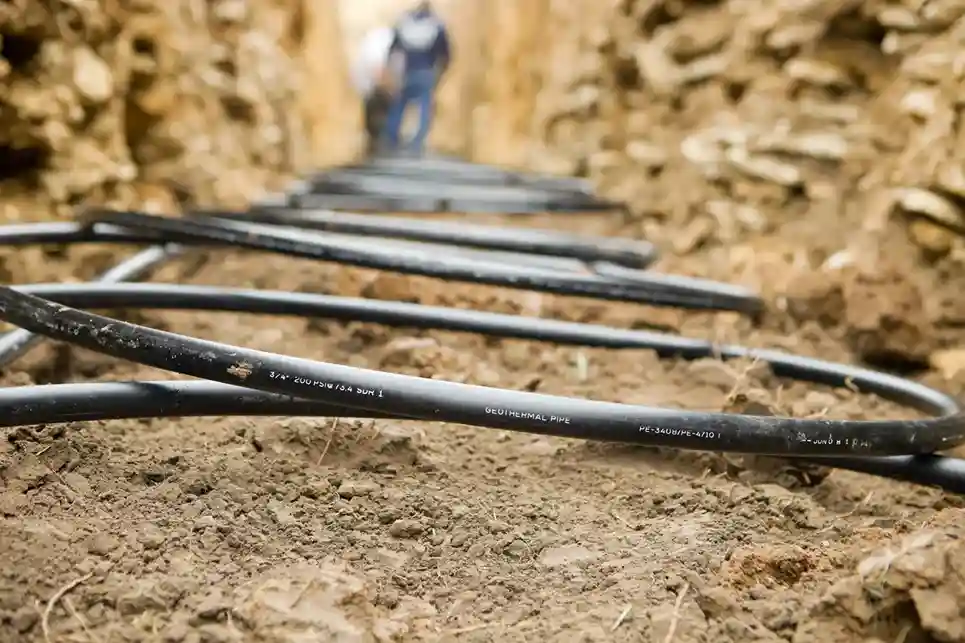
- The Ground Loop System: The most critical component of your installation is the ground loop. This network of high-density polyethylene pipes is buried underground to circulate water or an antifreeze solution. This fluid absorbs heat from the ground during the winter and dissipates heat into the ground during the summer. Our installation includes the excavation or drilling required to place these pipes, as well as the thermal fusion of all joints to create a leak-proof system guaranteed to last for decades.
- The Geothermal Heat Pump: Inside your home, the equipment footprint looks similar to a standard furnace, but the mechanics are vastly different. The heat pump unit contains the compressor, heat exchanger, and blower motor. Unlike air-source heat pumps that struggle to extract heat from freezing air, this unit draws from the constant temperature of the earth. The installation includes the placement of this unit, connection to your existing ductwork, and integration with the ground loop flow center.
- Flow Center and Pumping Module: The flow center is the heart of the fluid circulation system. It pumps the water solution through the ground loop and into the heat pump unit. We size these pumps specifically to overcome the pressure drop in the loop piping while using minimal electricity. This ensures that the energy used to move the water does not negate the efficiency gains of the system.
- Desuperheater for Hot Water Generation: Many of our geothermal installations include a desuperheater. This auxiliary component captures waste heat from the compressor during the cooling cycle and uses it to preheat your domestic hot water. In the summer, this effectively provides free hot water, further reducing your utility expenses.
Understanding the Installation Process
The timeline for a geothermal installation is more involved than a standard A/C replacement due to the exterior ground work. Airtech Mechanical Service Inc. manages the entire project lifecycle, coordinating the exterior excavation with the interior mechanical work to minimize disruption to your household.
Site Evaluation and Load Calculation
- The process begins with a Manual J load calculation. This engineering standard determines exactly how much heating and cooling your home requires.
- Concurrently, we evaluate your land availability, soil conductivity, and geology. In Jacksonville, specific soil types influence how efficiently heat transfers to and from the pipes.
- This data dictates the size of the heat pump and the total length of pipe needed for the ground loop.
Loop Design and Excavation
- Based on the site survey, we select the appropriate loop configuration.
- Vertical loops are drilled deep into the ground, often used when surface space is limited.
- Horizontal loops are laid in trenches over a wider area, typically more cost-effective if acreage allows.
- Pond loops may be utilized if a suitable body of water is available on the property.
- Heavy machinery is brought in to drill boreholes or dig trenches. This phase is the most labor-intensive and requires careful navigation of underground utilities.
Pipe Insertion and Fusion
- Once trenches or boreholes are ready, the polyethylene piping is inserted.
- All pipe connections use heat fusion, a process that melts the plastic together to form a single, continuous piece. Mechanical fittings are avoided underground to eliminate the risk of leaks.
- The system is pressure-tested at this stage to ensure integrity before backfilling the earth.
Interior Mechanical Installation
- While exterior work proceeds, technicians prepare the interior mechanical room.
- The old HVAC equipment is removed and disposed of properly.
- The new geothermal heat pump is set in place and connected to the electrical panel and thermostat.
- Ductwork modifications are made to accommodate the new unit’s airflow requirements.
System Flushing and Commissioning
- The ground loop is connected to the indoor unit via the flow center.
- Technicians flush the entire loop system to remove air and debris, then fill it with the appropriate water and antifreeze mixture.
- The system is powered on and tested across all modes of operation to verify temperatures, pressures, and flow rates meet manufacturer specifications.
When to Replace Traditional HVAC with Geothermal
Homeowners often debate whether to repair an aging conventional system or invest in geothermal. While the upfront cost of geothermal is higher, the decision often comes down to long-term asset management and monthly cash flow:
- The Financial Pivot Point: If your current air conditioner or furnace is over 12 years old and requires a repair exceeding 50% of its value, replacement is the logical financial step. When moving to geothermal, the 30% federal tax credit significantly lowers the net cost. When you factor in the monthly utility savings, often between 30% and 60%, the system frequently creates a positive cash flow situation within the first few years compared to sticking with a standard high-efficiency system.
- Longevity Considerations: Standard outdoor condensing units are exposed to rain, salt spray, and extreme temperature fluctuations, leading to a typical lifespan of 12 to 15 years. A geothermal system has no outdoor mechanical equipment. The ground loop is buried and protected, rated for 50+ years of life. The indoor unit is located in a conditioned space, extending its lifespan to 20-25 years. If you plan to stay in your home for more than five years, the total cost of ownership for geothermal is drastically lower than conventional systems.
- Performance in Extreme Weather: Air-source heat pumps lose efficiency as the outside temperature drops in winter or spikes in summer. They have to work harder to transfer heat against a high temperature gradient. Geothermal systems draw from a consistent ground temperature (typically around 60°F-65°F in this region). This means the system works the same amount whether it is 100°F or 20°F outside. If you prioritize consistent cooling and heating without the struggle of auxiliary heat strips, replacement is the superior choice.
Navigating Local Requirements
Installing a geothermal system involves navigating a specific set of local codes and environmental considerations. Our team handles the bureaucratic and logistical hurdles involved in these projects:
- Permitting and Zoning: Installation requires compliance with local building codes and potentially health department regulations regarding well drilling and groundwater protection. We secure all necessary permits before breaking ground. This includes verifying easement lines to ensure loops do not encroach on public utilities or neighbor property lines.
- Soil and Geology Factors: The coastal plain geology of North Carolina presents specific conditions for drilling. High water tables can actually be beneficial for geothermal conductivity, as water transfers heat better than dry soil. However, sandy soil requires specific drilling techniques to prevent borehole collapse during installation. We account for these geological realities during the design phase to ensure the loop length is sufficient to handle the thermal load.
- HOA and Community Guidelines: For residents in managed subdivisions, exterior modifications often require architectural review. Since the bulk of a geothermal system is underground and the exterior noise is non-existent (no loud condenser fan), geothermal is usually highly compatible with strict HOA guidelines. We provide the necessary diagrams and specifications to satisfy community review boards regarding the lack of visual and auditory impact.
- Electrical Infrastructure: Geothermal systems generally run on electricity but are highly efficient. However, older homes may need an assessment of the electrical panel to ensure it can support the startup amperage of the heat pump, although many modern units utilize soft-start technology to minimize this demand. We verify your electrical capacity early in the process.
Why Choose Airtech Mechanical Service Inc. for Your Transition
Geothermal installation is a specialized trade that bridges the gap between excavation, plumbing, and HVAC. It requires a higher level of technical certification and experience than installing a standard split system. An improperly sized loop or a poor grout job can render a system inefficient, negating the investment.
We approach every project with a focus on engineering precision. Our technicians are trained to calculate precise load requirements, ensuring your system is neither undersized (leading to lack of comfort) nor oversized (leading to short cycling and humidity issues). We utilize industry-standard thermal fusion for all pipe connections, eliminating the weak points that lead to underground leaks.
Furthermore, we understand the financial landscape of these upgrades. We assist you in identifying all eligible rebates and providing the necessary documentation for your federal tax credits. Our goal is to make the transition to geothermal as seamless and financially advantageous as possible.
Secure your home's energy future today. Contact us to schedule your consultation and begin the design of your geothermal system.
Ground-Based Systems Installed With Specialized Precision
Professional geothermal installation in Jacksonville, NC demands careful planning, precise integration, and system-specific expertise. Airtech Mechanical Service Inc. installs geothermal systems engineered to operate efficiently across ground loops, controls, and indoor components. Inaccurate installation often limits system capability. Our approach ensures correct integration and dependable long-term operation.
Implement geothermal technology through installation completed to exact technical standards.
Establish a Professionally Engineered Geothermal System
Other Services