

Geothermal Installation in Craven, NC
Upgrade to geothermal installation in Craven NC with Airtech Mechanical Services Inc. Enjoy energy savings reliable comfort & expert service. Get started today.
Stop Overpaying for Inefficient Heating and Cooling
Experience unbearable heat during the humid summers and chilly winters common to the area? You might be overpaying for inefficient heating and cooling systems that struggle to keep up with the weather patterns in Craven, NC. Contact us today to discuss financing options or schedule a site assessment for a geothermal upgrade.
Airtech Mechanical Service Inc. specializes in transitioning homeowners away from volatile utility bills toward stable, ground-source energy. While traditional HVAC systems fight against the outside temperature, our systems leverage the constant temperature of the earth to provide superior efficiency:
- Slash monthly utility bills by up to 70% with high-efficiency geothermal solutions.
- Enjoy consistent, dehumidified indoor comfort year-round, regardless of surface weather conditions.
- Benefit from low maintenance requirements and high durability that lasts for decades.
All installations meet local codes with comprehensive warranties and flexible financing options available to make the transition seamless.
What to Expect From a Geothermal Installation
Switching to geothermal energy is a significant construction project that transforms how your property manages thermal energy. Unlike swapping out a furnace, this involves integrating your home with the ground beneath it. A complete installation package covers every component required to capture, transfer, and distribute energy efficiently:
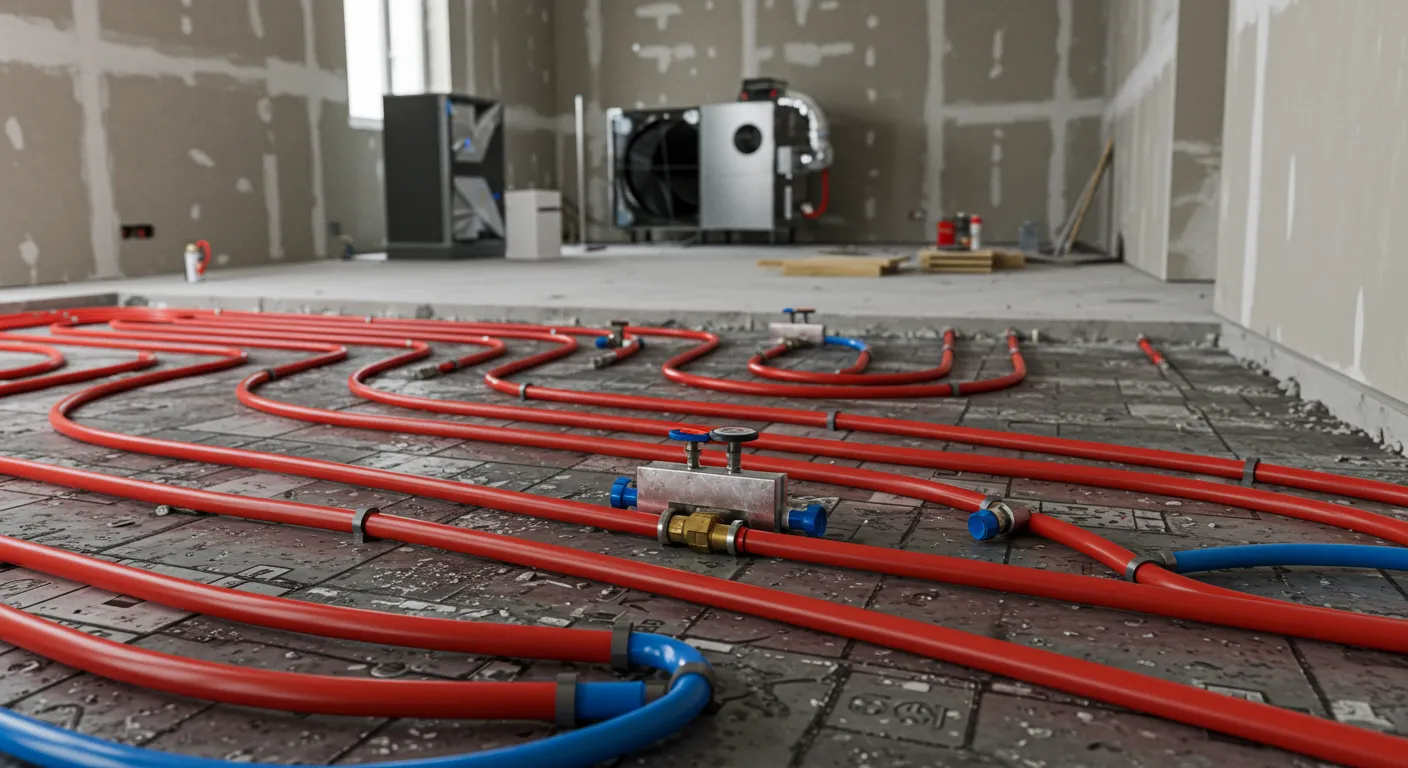
- The Ground Loop System: The core of the system is the loop field. High-density polyethylene piping is buried underground to circulate a water-based solution. This fluid absorbs heat from the ground during the winter and dissipates heat into the ground during the summer. Depending on your property layout in Craven, we design specific loop configurations:
- Vertical Loops: Holes are drilled 100 to 400 feet deep. This is ideal for properties with limited yard space or established landscaping that must be preserved.
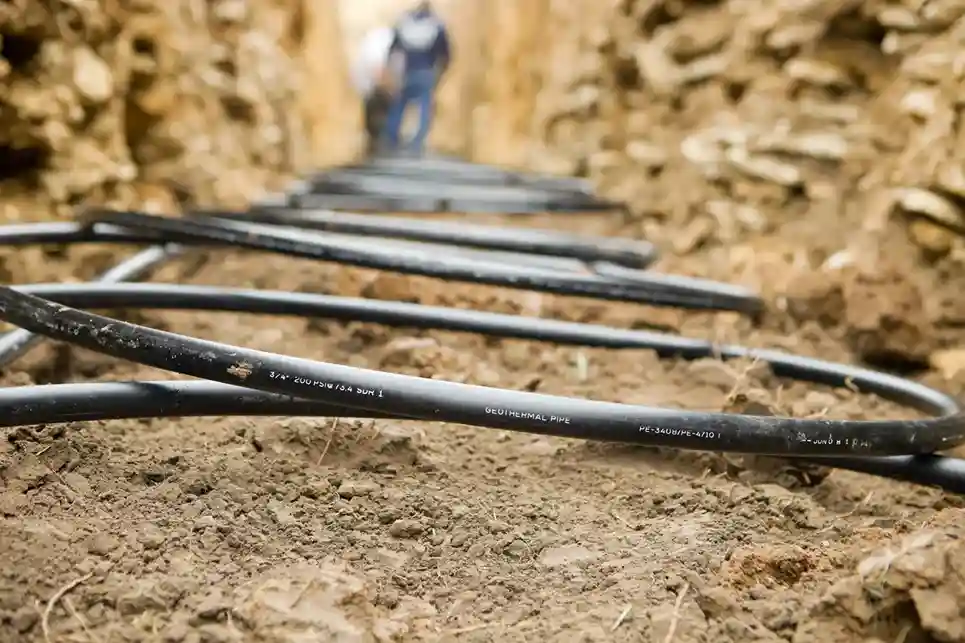
- Horizontal Loops: Trenches are dug four to six feet deep. This requires more land area but is generally more cost-effective if space allows.
- Pond/Lake Loops: If a water body meets specific depth and volume requirements, coils are submerged at the bottom, utilizing water’s excellent conductive properties.
- The Geothermal Heat Pump Unit: The indoor unit replaces your furnace and air conditioner. It houses the compressor and heat exchanger. Because it does not rely on outdoor air for heat exchange, the unit is installed entirely indoors, typically in a garage, basement, or mechanical closet, protecting it from the elements and extending its lifespan.
- Flow Center and Distribution: A flow center pumps the fluid through the ground loops. We also assess your existing ductwork. Since geothermal systems move higher volumes of air at slightly lower velocities than gas furnaces, modifications to the plenum or ductwork may be necessary to ensure whisper-quiet operation and optimal airflow.
- Desuperheater Connection: Most of our premium installations include a desuperheater. This auxiliary component captures waste heat from the compressor during the cooling cycle and uses it to preheat your domestic hot water. In the summer, this effectively provides free hot water, further reducing your total energy expenditure.
The Installation Process Explained
Executing a geothermal project requires coordination between excavation teams, loop installers, and HVAC technicians. We manage the entire timeline to minimize disruption to your daily routine:
- Site Survey and Load Calculation: The process begins with a Manual J load calculation to determine exactly how much heating and cooling your home requires. We analyze soil conductivity, land availability, and existing infrastructure.
- Loop Design and Permitting: Engineers design the loop field based on the thermal conductivity of the soil. We handle all necessary permits required by local municipalities and environmental agencies to ensure the drilling or trenching meets safety standards.
- Excavation and Loop Installation: Heavy machinery arrives to drill or trench. The piping is inserted and heat-fused to create a continuous, leak-proof system. This stage looks like a major construction site, but once backfilled, the ground is returned to grade.
- Manifold Connection: The individual loops are brought together into a manifold and routed through the foundation into the home. These lines are buried deep enough to prevent freezing or accidental damage from landscaping.
- Indoor Unit Installation: Technicians remove the old HVAC equipment. The new geothermal heat pump is set in place, connected to the loop piping, the electrical panel, and the ductwork.
- Flushing and Purging: The system is flushed with water to remove any debris or air pockets. An antifreeze solution is added to the loop fluid to prevent freezing during extreme winter snaps.
- System Startup and Balancing: We power up the system, calibrate the thermostat, and balance the airflow to ensure every room reaches the desired temperature.
When Replacement Beats Repair
Homeowners often debate whether to patch up an aging system or invest in a full geothermal replacement. While the upfront cost of geothermal is higher, specific scenarios make replacement the financially sound decision:
- Your Current System is Over 15 Years Old: Traditional air-source heat pumps and air conditioners typically last 12 to 15 years. If your equipment is approaching this age, efficiency has likely degraded significantly. Investing in repairs for a unit near the end of its life is rarely cost-effective. Geothermal indoor units often last 25 years, while the underground loops can last over 50 years.
- Rising Energy Bills: If you notice a steady increase in heating and cooling costs despite normal usage, your current system is working harder to achieve the same results. Geothermal systems operate with a Coefficient of Performance (COP) typically between 3.0 and 5.0, meaning for every unit of electricity used, three to five units of heating are delivered. Switching stops the financial bleed of inefficient operation.
- Inconsistent Comfort and Humidity Issues: Standard systems often blast hot or cold air in short bursts, creating hot spots and drafts. If your home feels clammy in the summer or dry in the winter, a replacement is necessary. Geothermal units run at lower speeds for longer periods, which provides superior dehumidification, a critical factor for comfort in this region.
- Planning for Long-Term Ownership: If you intend to stay in your home for five years or more, the Return on Investment (ROI) becomes highly attractive. The combination of monthly savings and the 30% Federal Investment Tax Credit often results in a break-even point within 5 to 7 years, followed by decades of pure savings.
Local Installation Factors
Operating in Craven, NC presents specific geological and climatic variables that influence how we design and install these systems. A generic approach does not work here; local knowledge is required for peak performance:
- Subtropical Climate and Humidity Control: The region experiences high humidity levels, particularly in summer. Air-source heat pumps struggle to remove moisture without overcooling the air. Geothermal systems, due to their long run cycles and variable speed compressors, are exceptional at extracting moisture. This reduces the load on the system and prevents mold growth or warped wood flooring.
- High Water Table Advantages: Coastal and low-lying areas in the region often have a high water table. Wet soil conducts heat significantly better than dry sandy soil. This is advantageous for geothermal efficiency, often allowing us to install shorter loop lengths to achieve the same thermal transfer, which can reduce installation costs.
- Hurricane Preparedness: Hurricanes and tropical storms are a reality here. Traditional outdoor condenser units are vulnerable to high winds, flying debris, and salt spray corrosion. A geothermal system has no outdoor mechanical equipment. The loops are safely buried, and the expensive mechanical components are secured inside the home. This makes the system virtually hurricane-proof regarding physical damage.
- Permitting and Utilities: We navigate the specific coding requirements for Craven County. This includes setbacks from property lines, septic systems, and wells. Additionally, we coordinate with utility providers to ensure your electrical service is adequate for the new unit, although geothermal systems often lower peak electrical demand.
Technical Precision and Professional Standards
The efficiency of a geothermal system is entirely dependent on the quality of the installation. Oversizing the unit or undersizing the loop field results in poor performance and eventual system failure:
- Accurate Load Calculations: We do not guess. We perform rigorous heat loss/heat gain calculations. This ensures the system is sized exactly for the thermal envelope of your building. An oversized unit will short-cycle, leading to premature compressor failure, while an undersized loop field will eventually freeze the ground, rendering the system useless.
- Heat Fusion Integrity: The underground piping is the most critical component because it is inaccessible once buried. We use heat fusion technology to join pipe sections. This process melts the plastic together, creating a bond that is stronger than the pipe itself. We do not use mechanical fittings underground, eliminating the risk of leaks or root intrusion.
- Ductwork Modifications: Geothermal heat pumps typically require larger ductwork to accommodate higher airflow volume. We evaluate your existing plenum and trunk lines. If the existing ducts are too small, we fabricate transitions to reduce static pressure. High static pressure forces the blower motor to work harder, increasing noise and energy consumption.
- IGSHPA Standards: Adhering to International Ground Source Heat Pump Association (IGSHPA) standards ensures that grouting, drilling, and pipe placement meet strict industry benchmarks. Proper grouting of the boreholes is essential not just for heat transfer, but to protect local groundwater aquifers from contamination.
Secure Your Energy Independence
Transitioning to geothermal energy is an investment in your property’s future value and your immediate comfort. It protects you from fluctuating fossil fuel prices and grid volatility while delivering a level of quiet, consistent heating and cooling that traditional systems cannot match.
By choosing a system grounded in the earth, you leverage a renewable resource right under your feet. The result is a home that remains comfortable during the hottest August afternoons and the coldest January nights, all while operating at a fraction of the cost of your neighbors' systems.
Airtech Mechanical Service Inc. is ready to help you analyze the savings potential and design a system tailored to your specific geology and home layout.
Take the first step toward permanent energy savings. Call us now to schedule your comprehensive geothermal evaluation.
Other Services