

Fast Fixes: How to Get 24-Hour Furnace Repair in Emerald Isle
Furnace failed? Get fast, reliable emergency furnace repair in emerald isle, nc 24/7. Learn warning signs & immediate steps.
When Your Furnace Fails: Understanding Emergency Heating Breakdowns
When emergency furnace repair in emerald isle, nc becomes necessary, knowing what to do next can mean the difference between a quick fix and a dangerous situation. A broken furnace in coastal North Carolina isn't just uncomfortable—it can put your family's safety at risk and cause costly damage to your home.
Quick Action Steps for a Furnace Emergency:
- Ensure Safety - If you smell gas (like rotten eggs), evacuate immediately and call 911. Turn off your system if you hear loud banging or see smoke.
- Check Basic Issues - Verify your thermostat is set to "heat" and above room temperature. Check your circuit breaker and replace your air filter if it's clogged.
- Call a Professional - Contact a local HVAC company with 24/7 emergency availability, NATE-certified technicians, and experience with coastal systems.

For comprehensive heating solutions, explore our furnace services or get emergency help now.
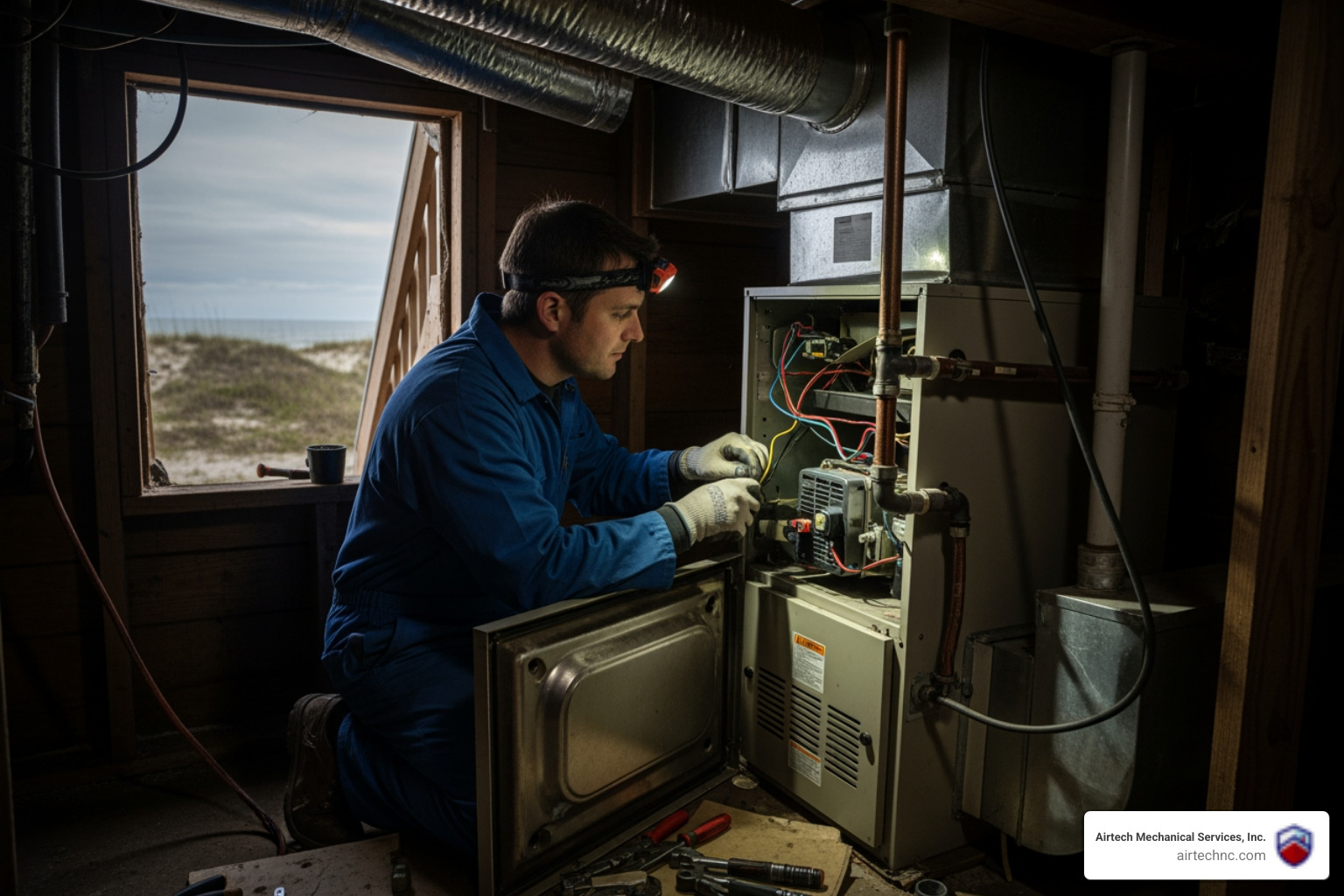
Emerald Isle's coastal climate creates unique challenges for heating systems. Salt air accelerates corrosion, humidity affects system efficiency, and while winters are mild compared to northern states, temperatures still drop into the 40s regularly—with occasional dips below 20°F that put real strain on your furnace. When your heating fails on a cold night, especially during a winter storm, you need help fast from technicians who understand these local conditions.
Recognizing a Furnace Emergency: Warning Signs You Can't Ignore
Imagine this: it's a chilly Emerald Isle evening, the kind where the sea breeze bites a little harder than usual, and suddenly your furnace decides to call it quits. Your home quickly goes from cozy to cold, and you're left wondering, "Is this just a minor hiccup, or do we need emergency furnace repair in Emerald Isle, NC right now?" Understanding the warning signs can help you determine the urgency of the situation and prevent further damage or safety hazards.
We often see several common indicators that a furnace needs immediate attention. The most obvious, of course, is a complete lack of heat. If your thermostat is set correctly and the system is running but no warm air is coming out, it's time to investigate. Beyond that, pay close attention to any unusual sounds or smells coming from your heating system. These sensory clues are often your furnace's way of screaming for help.
Common Mechanical Failures
Many furnace emergencies stem from mechanical breakdowns within the unit. These issues can quickly escalate, leaving you without heat when you need it most. Here are some of the most frequent culprits we encounter:
- Ignition System Problems: Modern furnaces use electronic ignitions or pilot lights to start the heating process. If these components fail, your furnace won't be able to ignite the fuel, leading to no heat. You might hear clicking sounds without the furnace firing up.
- Blower Motor Failure: The blower motor is responsible for circulating warm air throughout your home. If it breaks down, you might hear a loud humming or grinding noise, or simply feel no air coming from your vents, even if the furnace is technically producing heat. A failed blower motor can also lead to overheating of the furnace.
- Broken Heat Exchanger: This is a critical and potentially dangerous issue. The heat exchanger separates the combustion gases from the breathable air in your home. If it cracks, it can leak carbon monoxide into your living space. Signs include a strong, unusual odor (sometimes described as formaldehyde-like), visible rust or cracks on the furnace, or a yellow flame in the pilot light. This is a severe safety risk that requires immediate professional attention.
- Thermostat Malfunctions: Sometimes the problem isn't the furnace itself, but the command center. A faulty thermostat might not be sending the correct signals to your furnace, or it could be displaying inaccurate temperature readings. We've seen cases where a simple thermostat issue leads homeowners to believe they need an entirely new furnace.
- Leaky Ducts: While not a furnace component directly, leaky ducts can severely impact your system's efficiency and your home's comfort. If your ducts have cracks or disconnections, heated air escapes into unconditioned spaces, leading to inadequate airflow and uneven heating distribution. This forces your furnace to work harder, increasing wear and tear.
- Clogged Filters: A severely clogged air filter can restrict airflow so much that your furnace overheats and shuts down, or struggles to push warm air through your home. This is a common, yet easily preventable, cause of furnace issues.
For more detailed information on heating system issues and how we can help, please visit our furnace repair services page.
Sensory Clues to a Problem
Your senses are powerful diagnostic tools when it comes to furnace problems. Trust your nose and ears!
- Unusual Sounds: Furnaces are not silent, but they shouldn't sound like a rock concert. Keep an ear out for:
- Scraping Sounds: Often indicates a problem with the blower motor or fan, such as a loose or broken part hitting the housing.
- Banging or Popping Sounds: Can be a sign of delayed ignition, where gas builds up before igniting, causing a small explosion. This can also indicate issues with ductwork expanding and contracting.
- Squealing or Chirping: Usually points to a worn-out fan belt or bearings in the motor.
- Rattling: Could be loose panels, components, or even debris inside the unit.
- Persistent Odors: While a slight burning smell when you first turn on your furnace for the season is normal (as dust burns off), persistent or strong odors are red flags:
- Rotten Eggs (Sulfur): This is the smell of natural gas and indicates a potentially dangerous gas leak. If you detect this, evacuate your home immediately and call 911 from a safe location. Do not use light switches or appliances.
- Burning Plastic or Electrical Smell: This suggests an electrical component is overheating or wires are melting, which can lead to a fire. Turn off your furnace at the circuit breaker and call for emergency service.
- Musty or Dusty Smells: While not always an emergency, a strong musty smell can indicate mold or mildew in your ductwork, affecting indoor air quality.
- Visible Signs of Wear: Take a quick look at your furnace. Do you see any signs of rust, especially around the burners or exhaust flue? Are there any visible cracks on the unit? These can indicate corrosion or structural damage.
- Corrosion from Salt Air: This is particularly relevant for homes in Emerald Isle. Our coastal environment means higher humidity levels and constant exposure to salt air. Over time, these elements can accelerate corrosion on metal components within your furnace and outdoor units, leading to premature wear and failure. Specialized treatments and corrosion-resistant components are crucial for HVAC systems in our barrier island climate. If you notice rust or degradation on the exterior of your unit, it's a good idea to have us inspect the internal components.
Furnace Breakdown? Your Immediate Action Plan
When your furnace suddenly stops working, especially during the colder months, it can be quite alarming. Before panicking or attempting any complex fixes, it's crucial to follow a systematic approach to ensure safety and potentially resolve minor issues.
First and foremost, safety always comes first. If you smell gas, hear loud banging, or see smoke, follow the immediate safety steps outlined in the introduction. Once safety is confirmed, you can proceed with some basic troubleshooting.
- Check Your Thermostat: It sounds simple, but many emergency calls are resolved by a quick thermostat adjustment. Ensure it's set to "Heat," the temperature is higher than the current room temperature, and the fan setting is on "Auto." If your thermostat runs on batteries, try replacing them.
- Inspect Your Air Filter: A severely clogged air filter can restrict airflow, causing your furnace to overheat and shut down. Remove the filter and check its condition. If it's dirty, replace it with a clean one. This can often resolve airflow issues and allow your furnace to operate normally. We recommend changing your HVAC filter every one to three months, depending on usage and household conditions.
- Check the Circuit Breaker: Furnaces, like any major appliance, are connected to your home's electrical system. A tripped circuit breaker can cut power to your unit. Locate your electrical panel and look for any tripped breakers (they'll usually be in the "off" or middle position). Reset it firmly to the "on" position. If it immediately trips again, there's an electrical problem that requires professional attention.
- Verify the Pilot Light (if applicable): Older furnaces may have a pilot light. If it's out, follow the manufacturer's instructions (usually found on a label inside the furnace panel) to relight it. If it won't stay lit, or if the flame is yellow instead of blue, do not attempt to force it. This indicates a potential issue with the gas supply or burner.
- Turn Off the System: If none of these basic steps resolve the issue, or if you suspect a more serious problem, turn off your furnace at both the thermostat and the emergency shut-off switch (often located near the furnace or on a wall nearby). This prevents further damage and ensures safety until professional help arrives.
- Call for Professional Help: Once you've completed these steps, and if your furnace is still not working, it's time to call us. Our NATE-certified technicians are trained to diagnose and repair a wide range of furnace issues, ensuring your home returns to comfort safely and efficiently.
Why DIY is Risky for Emergency Furnace Repair in Emerald Isle, NC
While we encourage homeowners to perform basic troubleshooting, attempting complex DIY repairs during a furnace emergency, especially in a coastal environment, carries significant risks.
- Electrical Shock: Furnaces use high-voltage electricity. Without proper training and safety equipment, you risk severe electrical shock.
- Gas Leaks & Carbon Monoxide Poisoning: For gas furnaces, improper handling can lead to dangerous gas leaks or carbon monoxide emissions, which are odorless, colorless, and deadly. A broken heat exchanger, for example, is a serious risk that only a professional can safely diagnose and repair.
- Voiding Manufacturer Warranty: Most furnace manufacturers' warranties require professional installation and repair to remain valid. Attempting DIY fixes can void your warranty, leaving you responsible for the full cost of future repairs.
- Causing More Expensive Damage: What might seem like a simple fix could be a symptom of a larger, underlying problem. Misdiagnosing an issue or using incorrect parts can lead to more extensive and costly damage to your furnace, turning a minor repair into a major replacement.
- Lack of Specialized Tools and Knowledge: HVAC systems are complex machines. Our technicians have specialized tools, diagnostic equipment, and in-depth knowledge of various furnace models and their intricacies. This includes understanding how Emerald Isle's unique coastal conditions—such as salt air and humidity—affect furnace components and require specific repair approaches.
When it comes to your family's safety and comfort, it's always best to leave emergency furnace repair to the professionals.
How to Find Reliable Emergency Furnace Repair in Emerald Isle, NC
When your furnace breaks down unexpectedly, finding a reliable and efficient service provider is paramount. In Emerald Isle, with our unique coastal climate, it’s even more important to choose a company that understands the specific challenges your heating system faces.
Here’s what to look for when you need emergency furnace repair in Emerald Isle, NC:
- 24/7 Availability and Emergency Service: Furnace emergencies don't stick to business hours. A truly reliable provider will offer round-the-clock emergency services, day or night, year-round. This ensures you can get help when you need it most, whether it's the middle of a cold night or a holiday weekend.
- Fast Response Time: When your home is cold, every minute counts. Look for a company known for its prompt response. While we can't guarantee a specific minute-by-minute arrival time, our commitment is to respond quickly and efficiently to your emergency heating needs.
- Local Expertise: This is non-negotiable in Emerald Isle. Our coastal environment, with its salt air, high humidity, and occasional severe weather, significantly impacts HVAC systems. A local company will have experience with these conditions and how they affect furnace longevity and performance.
- NATE-Certified Technicians: NATE (North American Technician Excellence) certification is a gold standard in the HVAC industry. It means technicians have undergone rigorous training and testing, demonstrating a high level of expertise. Our NATE-certified technicians are equipped to diagnose and repair any furnace issue accurately and efficiently.
- Positive Customer Reviews and Reputation: Check online reviews and ask for recommendations. A company with a strong track record of customer satisfaction, especially for emergency services, is a good indicator of reliability.
- Licensed and Insured: Always ensure the company you choose is fully licensed and insured. This protects you from liability in case of accidents or improper workmanship.
Questions to Ask a Potential HVAC Company
When faced with a furnace emergency, you might feel rushed, but taking a moment to ask a few key questions can save you headaches later:
- Do you offer 24/7 emergency availability for furnace repair? Confirm they can respond to your specific emergency timing.
- Are your technicians NATE-certified and experienced in furnace repair? This ensures you're getting qualified professionals.
- Do you service Emerald Isle, NC, specifically? Confirming their service area ensures they can reach you promptly.
- What kind of repair warranties do you offer on your work? Understanding the warranty provides peace of mind. We stand by our work, offering comprehensive warranties on our services and new system replacements.
- Do you have experience with HVAC systems in coastal environments like Emerald Isle? This is crucial for ensuring they understand the unique challenges of salt air, sand, and moisture.
Why Local Expertise Matters for Emergency Furnace Repair in Emerald Isle, NC
In a place like Emerald Isle, local expertise isn't just a bonus; it's a necessity. Our unique barrier island climate presents challenges that technicians from inland areas might not fully grasp.
- Understanding Coastal Corrosion: The constant presence of salt in the air leads to accelerated corrosion on metal components of your furnace and outdoor units. Local experts know which parts are most vulnerable, how to protect them, and what corrosion-resistant materials are best suited for replacements.
- Familiarity with Humidity's Impact: High humidity levels, a staple of our coastal environment, can affect the efficiency of your HVAC system and contribute to issues like mold and mildew within ductwork. Local technicians are adept at identifying and mitigating these humidity-related problems.
- Knowledge of Local Codes and Regulations: Building codes and environmental regulations can vary by location. A local company will be up-to-date on all Emerald Isle-specific requirements, ensuring all repairs and installations comply with standards.
- Faster Arrival Times: When you need emergency furnace repair in Emerald Isle, NC, you don't want to wait for a technician to travel from hours away. A local company means faster dispatch and arrival times, minimizing your discomfort and the potential for further damage.
Our team understands the specific needs of Emerald Isle homes, from vacation rentals requiring rapid response and remote monitoring solutions to year-round residences needing robust, storm-ready installations. We offer specialized treatments, corrosion-resistant components, and custom maintenance plans to protect your system from salt air and sand. This deep local knowledge also extends to other heating solutions, such as heat pumps, which are an excellent choice for our climate due to their energy efficiency. For more information on how we handle various heating systems, including heat pumps, please visit our heat pump repair page.
Preventing Future Emergencies: Furnace Maintenance Tips
An ounce of prevention is worth a pound of cure, especially when it comes to your furnace in Emerald Isle. While we're always ready for emergency furnace repair in Emerald Isle, NC, taking proactive steps can significantly reduce the likelihood of a breakdown and extend the life of your system. Regular maintenance is not just a good idea; it's an affordable solution that can save you time, money, and headache in the long run. In fact, regularly scheduled preventative maintenance can reduce the risk of expensive breakdowns by as much as 95% and result in up to 30% savings on energy bills.
Here's a seasonal furnace maintenance checklist to help you avoid future emergencies:
- Schedule Annual Professional Service: This is the golden rule. We recommend scheduling a comprehensive furnace tune-up every fall, before the heating season begins. During this service, our NATE-certified technicians will inspect, clean, and test all critical components, identify potential issues before they become emergencies, and ensure your system is running at peak efficiency. For Emerald Isle properties, we often recommend quarterly maintenance for year-round residents and bi-annual checks for vacation properties due to the challenging coastal climate.
- Change Air Filters Regularly: A dirty air filter is one of the most common causes of furnace problems. It restricts airflow, forces your furnace to work harder, and reduces efficiency. Check your filter monthly and replace it every one to three months, or more frequently if you have pets or allergies.
- Keep the Outdoor Unit Clear (if you have a heat pump or dual fuel system): Ensure the area around your outdoor unit is free from debris, leaves, and vegetation. This allows for proper airflow and efficient operation.
- Check Thermostat Batteries: If your thermostat runs on batteries, replace them annually. A dead or dying battery can cause your furnace to malfunction or stop working entirely.
- Clear Vents and Registers: Make sure all supply and return vents inside your home are open and unobstructed by furniture, rugs, or drapes. Blocked vents can lead to uneven heating and strain on your system.
- Listen and Look for Changes: Pay attention to any new sounds, smells, or performance changes from your furnace. Catching a problem early can prevent it from escalating into an emergency.
By following these preventative measures, you're not only safeguarding your comfort but also protecting your investment. Regular maintenance helps keep your manufacturer's warranty intact and ensures your system operates as efficiently as possible, saving you money on energy bills. For comprehensive maintenance plans custom to your needs, explore our maintenance plans page.
Frequently Asked Questions about Furnace Emergencies
We understand that furnace emergencies can be stressful, and you likely have questions. Here are some of the most common inquiries we receive:
How often should I have my furnace professionally serviced?
We recommend having your furnace professionally serviced at least once a year, ideally in the fall before the heating season kicks into full gear. This annual tune-up is crucial for several reasons:
- Preventative Care: It allows our technicians to identify and address minor issues before they escalate into major, costly breakdowns.
- System Efficiency: Regular maintenance ensures your furnace operates at its peak efficiency, which can lead to significant savings on your energy bills.
- Warranty Compliance: Many furnace manufacturers require annual professional maintenance to keep your warranty valid.
- Longevity: A well-maintained furnace lasts longer, delaying the need for an expensive replacement.
For homes in Emerald Isle, the challenging coastal environment with its salt air and humidity means that some homeowners, particularly those with year-round residences or vacation properties, might benefit from more frequent checks—such as quarterly or bi-annual maintenance.
Is a strange smell from my furnace always an emergency?
Not always, but it should always prompt investigation. Here’s a breakdown of common smells and their implications:
- Rotten Eggs (Sulfur): This is the most critical and dangerous smell. It indicates a natural gas leak. If you smell rotten eggs, evacuate your home immediately and call 911 from a safe location. Do not use light switches, phones, or anything that could create a spark.
- Burning Dust/Musty Smell: A slight burning odor when you first turn on your furnace for the season is usually normal. It's often just dust burning off the heat exchanger. If the smell persists for more than a few hours, or if it's strong and accompanied by smoke, it could indicate a more serious issue like a clogged filter or a component overheating. A strong musty smell can also point to mold or mildew in your ductwork, affecting indoor air quality.
- Burning Plastic/Electrical Smell: This indicates an electrical component is overheating or wiring is melting. This is a fire hazard. Turn off your furnace at the circuit breaker immediately and call for emergency service.
- Oily or Metallic Smell: This could suggest an oil leak (if you have an oil furnace) or an overheating motor. Turn off the system and call a professional.
When in doubt, it's always safer to err on the side of caution and call a qualified HVAC technician to inspect your furnace.
What's the difference between a furnace and a heat pump?
While both furnaces and heat pumps provide heating for your home, they do so in fundamentally different ways:
- Furnace: A furnace generates heat by burning fuel (natural gas, propane, or oil) or using electricity to heat air, which is then distributed throughout your home via ductwork. Furnaces are heating-only systems, though they are often paired with an air conditioner for cooling.
- Heat Pump: A heat pump is an all-in-one system that can both heat and cool your home. Instead of generating heat, it moves heat. In winter, it extracts heat from the outside air (even cold air contains heat) and transfers it indoors. In summer, it reverses the process, extracting heat from inside your home and releasing it outdoors.
Suitability for Emerald Isle Climate:
For Emerald Isle's climate, heat pumps are an excellent choice. Our relatively mild winters mean that a heat pump can efficiently provide warmth without the higher fuel consumption of a traditional furnace. They are also incredibly energy-efficient because they transfer heat rather than creating it. Many homes in our area use dual-fuel systems, which combine an electric heat pump with a gas furnace for maximum efficiency and comfort, especially on those rare days when temperatures dip significantly. Our team is experienced in repairing, installing, and maintaining both furnaces and heat pumps, ensuring you have the right solution for your home's needs.
Stay Warm and Safe with Professional Furnace Repair
Navigating a furnace emergency can be daunting, but with the right knowledge and a trusted partner, you can quickly restore comfort and safety to your Emerald Isle home. We've covered the critical warning signs, your immediate action plan, and the importance of professional, local expertise. Attempting complex DIY repairs can be dangerous and costly, especially in a coastal environment where unique challenges like salt air corrosion need specialized attention.
Prevention is your best defense against unexpected breakdowns. Regular professional maintenance, diligent filter changes, and an awareness of your system's performance can save you from the stress and discomfort of a cold home.
At Airtech Mechanical Services, Inc., we're committed to keeping you comfortable through every season. With over 20 years of experience and NATE-certified technicians, we provide reliable heating, AC repair, installation, and maintenance, specializing in the unique HVAC needs of coastal communities like Emerald Isle. We pride ourselves on our commitment to customer satisfaction and our deep understanding of how our local environment impacts your heating system.
For fast and reliable emergency furnace repair in Emerald Isle, NC, contact our team today. We're here to ensure your home remains a warm, safe haven, no matter the weather.
Recent Blogs

Ready for Reliable HVAC Service? Schedule Your Service Today
Other Articles
Discover More Articles

January 12, 2026
10 Tips to Winterize your Home
Learn essential winterization tips to keep your home warm, energy-efficient, and protected from harsh winter weather conditions.
.webp)
January 12, 2026
5 Common Heating Problems & What Could Be Causing Them
Discover 5 common heating problems and what could be causing them. Expert insights on furnace issues, their causes, and troubleshooting solutions.
.webp)
January 12, 2026
6 Tips For Preparing Your Air Conditioning Unit This Fall
Essential tips for preparing your air conditioning unit this fall. Winterize your AC properly with maintenance, cleaning, and protection strategies.